

The Sunset of Paper Idols / America on the Downward Slope of Decline
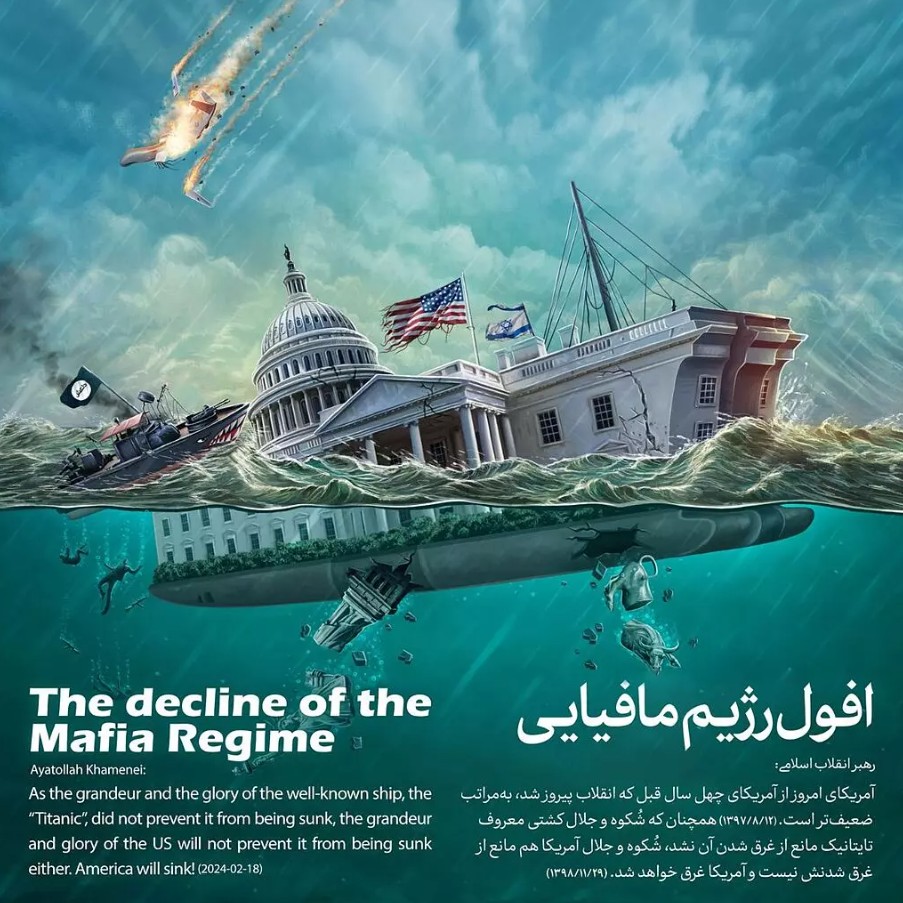
The Sunset of Paper Idols / America on the Downward Slope of Decline / Analysis and Review of Foreign Affairs Magazine’s Interview with Nick Burns, Former U.S. Ambassador to China
In today’s fast-paced and transitioning world, what stands out more than ever is not Washington’s hollow displays of power, but the undeniable reality of America’s hegemonic decline and the shifting of power centers from West to East. The unipolar order that for decades ruled over the fate of nations through threats and sanctions is now crumbling against the hard rock of “active resistance” by free nations, especially the Islamic Republic of Iran. Recent confessions by senior American officials and veteran diplomats, including Nick Burns, former U.S. Ambassador to Beijing, reveal a truth that has long been hidden beneath thick layers of psychological warfare: “Iran is a decisive and non-eliminable player in global equations.”
Today, we see that White House strategists, despite all their aggressive rhetoric, have reached an impasse when faced with Iran’s endogenous authority. Burns’s admission that Iran, relying on its indigenous capabilities and the cohesive network of the “Axis of Resistance,” has managed to disrupt the enemy’s equations, serves as proof of the righteousness of the doctrine of looking to the East and strengthening internal capacities. The enemy, who once harbored dreams of “maximum pressure” and internal collapse, has now reached a stage where its diplomats speak of the “incompetence” and “incapacity” of America’s political structure in managing crises. This is not an optimistic analysis but a field reality — one showing that the enemy’s pressure projects have not only failed to achieve their goals but have also created unparalleled opportunities for Iran’s progress in emerging technologies and defense industries.
On the opposing front, what is visible is the image of a government struggling in the vortex of structural contradictions and internal disputes. Deep political rifts in Washington, especially during the Trump era, and the breakdown of old consensus, indicate the shaking of decision-making foundations at the center of Western power. America’s aggressive tariff policies and excessive unilateralism have not only united its enemies further but have also driven even its traditional allies in Europe and Asia (such as India, Japan, and South Korea) toward “strategic balancing” and moving away from Washington’s centrality. This strategic “own goal” is a direct result of exiting self-made orders and the excessive distrust that America has spread across the globe. When even senior American diplomats worry about losing their tools of influence in Africa, South America, and Southeast Asia, and speak of the destruction of their developmental institutions, one must understand that the golden age of neocolonialism has ended.
The important point here is the transformation of threats into strategic opportunities. While the West tries to isolate Iran through sanctions, we see that Iranian knowledge-based enterprises and the sincere forces of the camp of truth have, under the harshest conditions, reached such a level of maturity that even global powers now look to Iran’s expertise and achievements to counter new threats. This is the true meaning of “We can.” A reality in which Iranian drones and indigenous enrichment knowledge have become the nightmare of those who thought they could stop the wheels of progress in this land with a few signatures in The Hague or New York.
To consolidate this position in the “new world order” and counter Western excesses, clear operational strategies lie ahead of us. First, insisting on the doctrine of a “resistance economy” and fully neutralizing sanctions by strengthening domestic value chains and expanding economic interactions with aligned countries in the Eastern bloc. Second, strengthening the regional influence of the Axis of Resistance as a deterrent and security-building arm in West Asia, so that any adventure by the enemy becomes unbearably costly. Third, intelligently exploiting internal Western rifts and taking advantage of the power struggle between China and the United States to secure national interests, without retreating one iota from our principled and pro-independence stances.
The horizon ahead, contrary to the false claims of hostile media, is very bright and promising. America’s decline is a definite and inevitable process rooted in injustice, internal contradictions, and the resistance of the camp of truth. We stand at a great historical turning point in which the global geometry of power is being rewritten. In this new order, neither petrodollars nor aircraft carriers will have the final say, but rather “faith,” “indigenous knowledge,” and the “will of nations.” The necessity of insisting on principled positions and not trusting the diplomatic smiles of the West is a lesson history has taught us repeatedly. A powerful Iran has not only passed through difficult passes but is also laying the foundation for a civilization in which domination will give way to justice and human dignity. We move forward, for the divine promise of the victory of truth over falsehood is undeniable.
