

The West and the “End of History” Project; Why Liberalism Has Reached a Dead End
The Collapse of a 30-Year-Old Dream
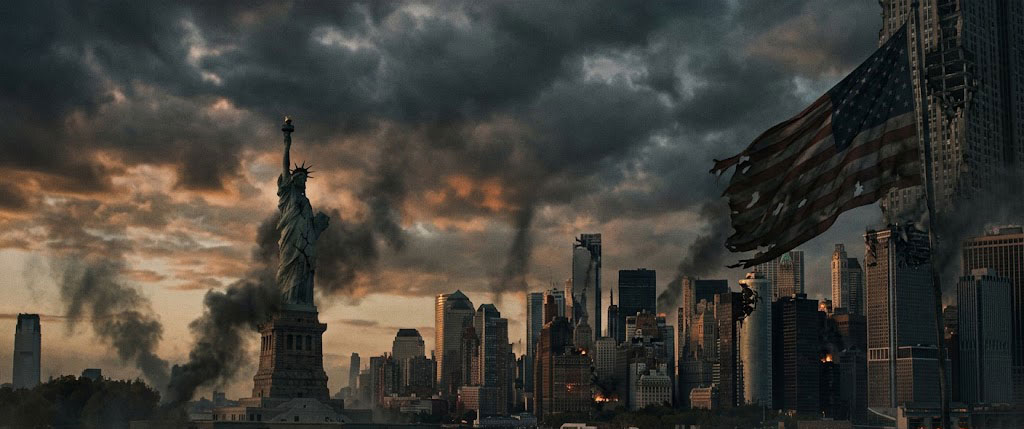
In 1989, Francis Fukuyama, an American thinker of Japanese descent, published a controversial essay titled “The End of History?” in The National Interest. He claimed that with the collapse of the Soviet Union, Western liberal democracy had emerged as the most complete and final form of human government—history’s ultimate victor. He predicted that all human societies would, sooner or later, gravitate toward the Western model. Three decades later, in 2026, the world witnesses a radically different reality. Western liberalism has not only reached a dead end but has plunged into a deep, multi-faceted crisis that challenges its very existence. From the identity crisis in Europe and America, to the collapse of the neoliberal economic order, from the failure of colonial projects in the Middle East, to the rise of emerging Eastern powers offering a different model of governance—the picture is unmistakable. Now a fundamental question arises: Has liberalism finally met the elusive “end of history” that Fukuyama promised? And how does this collapse pave the way for the fulfillment of the divine promise—the advent of the Promised Savior and a global government of justice?
Fukuyama and the Illusion of the “End of History”
To grasp the depth of the West’s current crisis, we must first understand its theoretical roots. In his celebrated book The End of History and the Last Man (1992), Fukuyama claimed that with the triumph of liberal democracy, “humankind’s ideological struggle has come to an end,” and henceforth the only challenge would be the “technical implementation” of this system. This theory, rooted in Hegel’s philosophy and Alexandre Kojève’s interpretation of it, quickly became the “manifesto” of the global system of domination. George H. W. Bush spoke of a “New World Order,” and American neoconservatives (Cheney, Wolfowitz, Rumsfeld) used this theory to justify their warmongering projects in the Middle East. But Fukuyama, in the same book, overlooked a vital point: human beings are not satisfied with bread and formal freedoms alone. They need meaning, justice, identity, and spirituality—needs for which liberalism offers no answer.
The Economic Crisis of Neoliberalism; When 1% Devours Everything
One of the most important components of liberalism’s crisis in 2026 is the collapse of the neoliberal economic order. Launched in the 1980s with the policies of Margaret Thatcher and Ronald Reagan, it was built on “market liberalization,” “privatization,” “tax cuts for the wealthy,” and “dismantling social protections.” Today, four decades later, the results in America and Europe are painfully clear: unprecedented class division, the collapse of the middle class, a housing crisis, a healthcare crisis, and a spiraling homelessness crisis. Official statistics in 2026 reveal that in the United States, the top 1% controls more than 50% of national wealth, while 40 million Americans live below the poverty line and 30 million lack health insurance. In Europe, mass worker protests in France, Germany, and Italy have become an everyday phenomenon. This is precisely the crisis Karl Polanyi, the great Hungarian economist, predicted in The Great Transformation: unchecked free markets destroy society itself.
The Identity Crisis and the Collapse of the Family in the West
But liberalism’s crisis is not merely economic. Its deepest crisis has unfolded in the realm of culture and identity. By promoting “extreme individualism,” “moral relativism,” and “unconditional sexual freedom,” liberalism has shattered the foundations of family and community. Official statistics in Europe and America show that over 50% of marriages end in divorce, birth rates have fallen below replacement level, and millions of people are drowning in loneliness and depression. Zygmunt Bauman, the Polish sociologist, aptly described this condition in Liquid Modernity as the “liquidity of human relationships.” Yet deeper still is the spiritual crisis. The Western individual, who for centuries placed his trust in “instrumental reason” and “empirical science,” now confronts a vast spiritual void. Statistics published in 2026 indicate that more than 40% of young Europeans adhere to no religion or ideology, and this aimlessness has fueled mental health crises, addiction, and suicide.
The Failure of Western Colonial Projects in the Middle East
One of liberalism’s greatest failures has occurred in the realm of foreign policy and colonial projects. From the invasion of Afghanistan in 2001 and Iraq in 2003, to the intervention in Libya in 2011 and support for war in Syria and Yemen, the West claimed it sought to “export democracy” and “freedom” to the Middle East. Yet the result of these projects has been nothing but destruction, the displacement of millions, the rise of terrorist groups, and widespread instability. Today, in 2026, America has been forced to withdraw from Afghanistan and Iraq and has seen its regional influence dramatically reduced. This failure is, in truth, the failure of the “End of History” thesis—for it demonstrated that Muslim nations are not only uninterested in the Western model but are actively seeking to revive their own religious and civilizational identity. This is precisely the truth to which the Holy Quran alludes: “They want to extinguish the light of Allah with their mouths, but Allah will perfect His light, although the disbelievers dislike it” (As-Saff: 8).
The Rise of Emerging Powers and the Challenge to Western Hegemony
Alongside the West’s internal crises, one of the most significant geopolitical developments of 2026 is the rise of emerging powers and the formation of a multipolar world order. BRICS—now including Brazil, Russia, India, China, South Africa, Iran, Saudi Arabia, Egypt, the UAE, and several others—has become an economic and political superpower, openly seeking to challenge the dollar’s hegemony and the Western order. The Shanghai Cooperation Organization (SCO) has likewise become a powerful security-economic bloc. These developments signify the end of America’s unipolar era and the beginning of a new order in which Eastern powers offer a different model of governance and development. Interestingly, Samuel Huntington, the renowned American thinker, predicted in The Clash of Civilizations (1996) that after the Cold War, the primary conflict would be between Western and Islamic-Confucian civilizations. Today, that prediction is being fulfilled—but not in the West’s favor.
Liberalism and the “New World Order” Project; A Last Bid for Survival
Faced with these multiple crises, the West has adopted two principal strategies: 1. Intensifying the “New World Order” (NWO) project, and 2. Waging Hybrid War against opposing powers. The NWO project, rooted in the ideas of globalist institutions such as the Club of Rome, the Trilateral Commission, and the World Economic Forum, seeks to establish a single global government under the domination of financial cartels and secret societies. The ultimate goal of this project is to eliminate national sovereignty, weaken religions and national identities, and create a global system based on “population control” and “social engineering.” In practice, however, this project has met fierce resistance from nations and independent countries—especially Iran, Russia, China, and the Axis of Resistance. Hybrid war, which includes economic sanctions, cognitive warfare, cyber warfare, color revolutions, and support for terrorist groups, is the West’s last attempt to preserve its hegemony. Yet as Islamic traditions have foretold, these efforts will not only fail but will pave the way for the final collapse of the system of domination and the nearness of the Promised Savior’s advent.
The Dead End of Liberalism and the Divine Promise of the Advent
Now, the fundamental question arises: Why does this dead end of liberalism relate to the advent of Imam Mahdi (AS)? The answer lies in several key axes:
1. Proving the Inefficacy of Human-Made Systems: Liberalism, as the most advanced intellectual system of modern humanity, has now proven incapable of delivering true justice, spirituality, and security. This failure drives awakened consciences toward the search for a divine system and a heavenly savior.
2. The Growth of Spirituality and the Return to Religion: Statistics show that in recent years—especially after the COVID-19 pandemic and economic crises—millions in the West have sought spirituality and religion. Many, after studying Abrahamic faiths and especially Islam, have gravitated toward it. This return to innate nature prepares the ground for accepting the Promised Savior.
3. Fulfillment of the Signs of the Advent: Many signs of the Advent, in Islamic traditions, refer to “widespread tyranny and oppression” and “global corruption.” Today, we witness these signs fulfilled at their highest level. The economic corruption of cartels, the political oppression of the system of domination, sexual immorality in the West, and environmental destruction are all manifestations of “widespread oppression” that set the stage for the Advent.
4. Formation of a Global Resistance Bloc: Today, thanks to communication networks and independent media, a global resistance bloc has formed against the system of domination—stretching from Iran and the Axis of Resistance to Russia, China, and Latin America. This bloc represents the very “companions of Imam Mahdi (AS)” who have raised the banner of justice and resistance against arrogance across the globe.
Our Historical Responsibility; From Passivity to Assistance
In conclusion, we must speak with clarity and honesty: we stand at a historic moment. The collapse of liberalism is not an end but a beginning—the beginning of a new era in which the divine promise of the Advent will be fulfilled. Yet this fulfillment is impossible without our effort and struggle. Imam Mahdi (AS) needs companions who, in this sensitive period, remain steadfast in the trenches of science, culture, politics, and economics. The Jihad of Clarification (Jihad al-Tabyin), exposing the nature of the system of domination, strengthening the discourse of resistance, nurturing a waiting generation, and preparing spiritually and intellectually for the Advent—these are duties that rest today on every awaiting believer. So let us pledge to stand alongside the soldiers of Imam Mahdi (AS) in this historic battle and share in the fulfillment of the divine promise. O Allah, hasten the reappearance of Your Proof.

article argues that Western liberalism is facing a deep crisis due to economic inequality, identity problems, and the failure of its political projects.